
Leon Botstein (Finally) Resigns
An entanglement with Jeffrey Epstein was only a symptom of an imperial presidency that needed to end

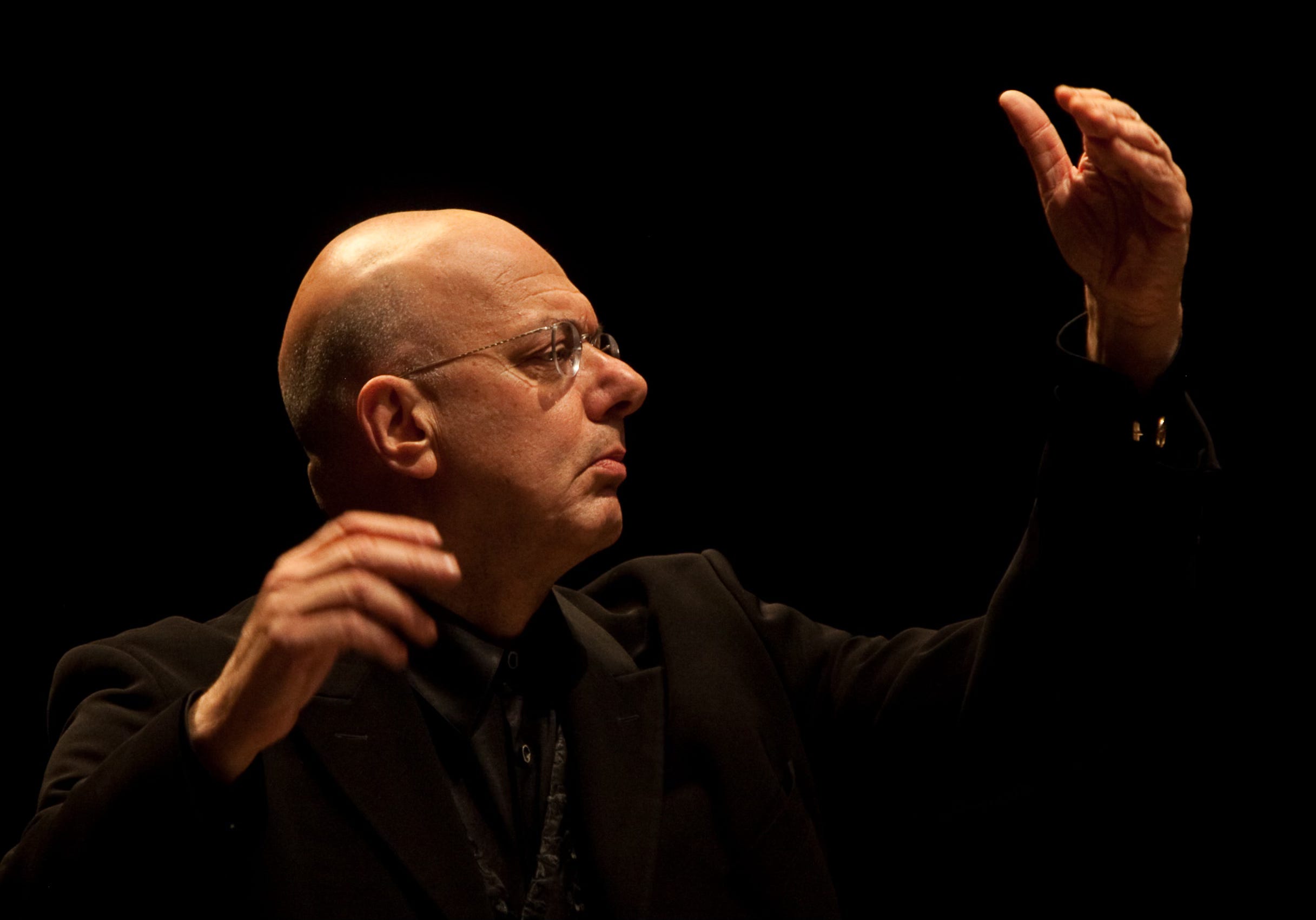
Soon-to-be-former President of Bard College Leon Botstein, conducting the American Symphony Orchestra at The Richard B. Fisher Center for the Performing Arts at Bard College on October 23, 2010. Photo Credit: Matt Dine/Wikimedia Commons

Who was surprised that Bard President Leon Botstein ended up in the Epstein files? Not me.
Botstein was exactly the sort of person—larger than life, iconoclastic, egotistical, and the creator of a unique educational brand by disregarding convention—that you would expect to find running a college whose name was synonymous with the arts, and who you would also expect to find orbiting a person like Epstein. Known as a master fundraiser, Botstein’s connection to George Soros’s Open Society Institute (OSI) put Bard on the map. His reputation as a fundraiser peaked in 2021, when OSI recognized Bard as a hub of progressive thought with a $500 million matching grant.
Each man had something the other wanted. Epstein had a voracious desire for unearned academic recognition, and Botstein’s dual career as a college president and an international conductor made him a unique and intriguing figure to a man who collected interesting dinner guests like other rich people collect art. Botstein, on the other hand, had an unwavering nose for people who needed, for whatever reason, to give a lot of money to good causes.
And the Bard ecosystem was, and is, a genuinely good cause: a college curriculum that emphasized multidisciplinary thinking and seminar-style learning; a graduate center in Manhattan offering degrees in the arts; a string of public high schools that sifted the Bard curriculum downward to students doing college-level work at 16; international campuses; a prison education program based on classical learning; and summer music festivals that celebrated less well-known composers.
Becoming President of Bard in 1975, when he was 29 years old, Botstein has raised at least $2.5 billion over the almost 60 years he has run the college (some put the number at closer to $3 billion.) An institution that was down to its last $100K when he took over now boasts an endowment of over $1 billion, a number that would probably be larger had the college not been running so many initiatives. That number doesn’t put Bard in the top ranks of liberal arts colleges: Williams and Amherst have endowments of almost $4 billion; Pomona, Wellesley, Bowdoin, and Swarthmore all hover around the $3 billion mark.
But when you consider that the Botstein era has played a major role in reframing what is possible in American higher education, it isn’t bad. More importantly, Bard still exists, while many liberal arts colleges have closed or become diminished, particularly progressive ones. The New School, where I taught prior to retirement two years ago, is undergoing a major restructuring (which includes eliminating 15% of its faculty and staff) in the face of a $48 million deficit. Hampshire College, which almost closed 7 years ago but never recovered momentum, will cease its programs by the end of the calendar year.
That said, Botstein’s departure as president of Bard is overdue. The man is almost 80, a poster child for academics who believe that their own need to stay too long at the fair equates to the good of the institution. Such people are also often enabled by the legend they have crafted around themselves. As Susan D’Agostino reported at Inside Higher Education when his seven-year social and financial relationship with Epstein hit the news, Botstein was often described by various enablers as “inseparable from the institution itself” and “synonymous with the institution.” As one trustee told The New Yorker in 2014 when Botstein was nearly 70, “Without Leon, there could be no more Bard.” Recently, a second trustee described the potential displacement of Botstein amidst the Epstein revelations as “an existential crisis.”
Let’s be clear: it was the possibility that Botstein would have to resign that was the existential crisis in question for this trustee—not what had actually happened, which is that in currying favor with a sex trafficker, Botstein had put his students in harm’s way.
The investigative report issued by the law firm WilmerHale says this clearly. Oddly, although the New York Times feature that announces Botstein’s departure links to the report, the story never mentions this crucial point. And while the story does characterize a second finding—“Dr. Botstein had ignored the concerns of a senior faculty member who advised him that Bard should avoid Mr. Epstein”—the truth is much worse. What the investigator says is this: “In deciding to pursue Jeffrey Epstein in 2012, President Botstein was presented with information” from a faculty member “regarding Epstein’s crimes to which he pled guilty in 2008 and the related allegations against him. President Botstein did not try to further understand what Epstein had done or learn what it meant that Epstein was found in 2011 to be a New York State Level 3 Sex Offender.”
As WilmerHale points out, a simple Google search might have reinforced the faculty member’s explicit warning. Instead, Botstein argued that sexual felonies were like all other offenses, and Epstein merely another rehabilitated offender. In fact, the sentencing judge had warned that Epstein had “ a high risk of re-offending.” The reality was that Botstein did not care that Epstein’s money was dirty, because “Bard’s need for funds was paramount.” As he said: “I would take money from Satan if it permitted me to do God’s work.”
Can we note that Botstein was, in fact, describing his life and legacy as a college president as “God’s work?” More important is that there was no discussion, no decider but Leon Botstein when it came to Bard’s role in laundering a sketchy donor’s reputation. That a college president was entirely without checks and balances when it came to laundering money and reputations is shocking—except that everyone has known this for years.
The WilmerHale investigators also emphasize that, although Botstein would have taken money from Satan, he did not believe that Jeffrey Epstein was Satan, or even a bad person. While many prominent people have denied ever seeing or interacting with Epstein’s victims, Botstein has—almost uniquely—not dissembled on this point. Instead, he
did not perceive the women around Epstein as raising concerns about Epstein’s conduct. Nor did he recognize the implications of doing favors for Epstein’s young women assistants and their parents, including that he could be vouching for Epstein with them.
President Botstein is adamant that he did not see the young women who surrounded Epstein or those he was asked to help as possible victims, given how busy he is and how often he is asked to help people in the course of his busy schedule.
Against the background of Epstein’s conviction, President Botstein’s contacts with Epstein, over the period 2012 to 2019, could have alerted President Botstein to the possibility that he and Bard would be facilitating Epstein’s continued abuse of women, legitimizing Epstein, or exposing Bard students to a person like Epstein.
Those contacts included approximately 25 visits to Epstein’s townhouse, a two-day visit to Epstein’s Little St James Island and a flight to the Island with one such woman (along with Leon Black’s family), two visits by Epstein to Bard and to various concerts and recitals accompanied by multiple women who have since been identified as victims of Epstein, and multiple requests that President Botstein help such women—in the form of invitations to concerts and rehearsals, visits with the women and their parents, advice on their musical careers, etc.
It’s really stunning. Warned that Epstein was a dangerous person, Botstein was “too busy” to think about this seriously, even as he dangled interactions with students as young as 14 to woo donations. “There were many more invitations extended to Epstein,” the WilmerHale report notes, “to stay at a Bard guest cottage, to attend a concert by conservatory students, to visit Bard High School Early College, for example—that, had they been accepted, could have further exposed Bard students to Epstein.”
This Epstein story is not, however, like all other Epstein stories: I suspect that in Botstein’s case, unethical behavior that could be documented was the wedge some on the faculty needed to get him out. First and foremost is his age, 80, and the fact that no college president should remain in office for 50 years, accumulate unchecked institutional power, and establish himself as the arbiter of all things.
It is well known among academics that Botstein had authority over all hiring and firing. This is something that is de facto at most universities: all personnel matters go to the president and the Board of Trustees. In practice, however, this is largely ceremonial. Most presidents delegate personnel decisions to expert faculty committees and deans who determine the needs of the curriculum, the state of the field, and the quality of the candidates. Not Botstein: in fact, until 2016, he was even his own Title IX officer, which accounts (in part) for the college’s abysmal record on adjudicating sexual harassment and sexual assault.
The moral of this story? A fifty-year presidency, no matter how visionary is, in the long term, unhealthy for a faculty and a college. Botstein’s achievements are noteworthy, but his failures are too. His virtues, and his flaws, are now part of the institution’s DNA, and what comes next in this difficult time for higher education will be a great challenge—and opportunity—for the greater Bard community.
Short takes:
Why shouldn’t Patriots head coach Mike Vrabel and NFL reporter Dianna Russini be having an affair? Well, their respective spouses might have something to say about it—but more importantly, as Jemele Hill writes at The Atlantic, whether it’s politics or sports, “Married or not, reporters should never develop intimate relationships with their sources.” Yes, it’s a tricky line—since getting close is part of effective reporting—and yes, the misogyny of singling Russini out is troubling, given the number of male journalists who travel with teams and party in bars with athletes and coaches. “Putting aside the tabloid nature of the situation, it’s fair to wonder how Vrabel and Russini’s relationship—whatever it entailed—could have influenced Russini’s reporting,” Hill writes, “which in turn influences real people’s lives and livelihoods.” She has one in mind specifically: the drumbeat of reporting, led out by Russini, that has pushed receiver A.J. Brown away from the Philadelphia Eagles and towards—the Patriots. “Could Russini have reported on Brown’s discontent in order to help facilitate a trade to New England? Maybe, maybe not—but we might never know, as the league dismissed the idea of conducting any investigation into Vrabel’s behavior.” (March 4, 2026)
Multiple outlets report that the buzz inside the DNC is that support for Chair Ken Martin has eroded. As Lauren Egan reports at The Bulwark, “Martin’s rocky tenure as party chair does owe something to factors out of his control. A party that is out of power but desperate to flex its muscle will naturally see its leaders as feckless.” And yet…and yet… “Since 2025, the DNC has spent more money than it has raised and has more debt than cash on hand,” Egan continues. “The RNC has a roughly seven-to-one money advantage over the DNC, and last October, Martin took out a $15 million loan ahead of the elections in Virginia and New Jersey. Multiple people familiar with the DNC’s money issues said that the situation is so dire that Martin will likely be forced to make another tough call this summer: take out another loan or lay off staff.” Just in time for the midterms! Somebody, please: bust a move. (May 3, 2024)
Spirit Airlines is no more as of last Saturday, which is no loss if you ask me: it was cheap, true, but at the cost of being dirty, without services, making customers pay for a cup of water (OK, I am exaggerating, but only a little.) As I said to a friend the other day, the planes were like school buses in the air. Nevertheless, Spirit was killed by fuel prices created by the needless war on Iran, and according to Rebecca Schneid of TIME Magazine, Spirit could be the first of many business to implode in the new Trump economy. “Since the beginning of the U.S.-Israeli attack on Iran on Feb. 28, the price of jet fuel has increased by nearly 70% in the U.S.,” Schneid writes. “Smaller airlines around the world are having to make harder decisions due to their tighter profit margins. In mid-April, Mexican holiday airline Magnicharters canceled all flights for two weeks, stranding some travelers in popular vacation destinations like Cancún, Mérida and Huatulco.” Airfares are up 37%, and budget carriers like RyanAir, Vietnam Airlines, AirAsia, and Scandinavian Airlines have all cited their schedules, leading to additionally lower profitability. (May 2, 2026)
The detail of him being his own Title IX officer is new to me--and stunning.
Fabulous reporting Claire!